New appointment at Chelsea Harbour

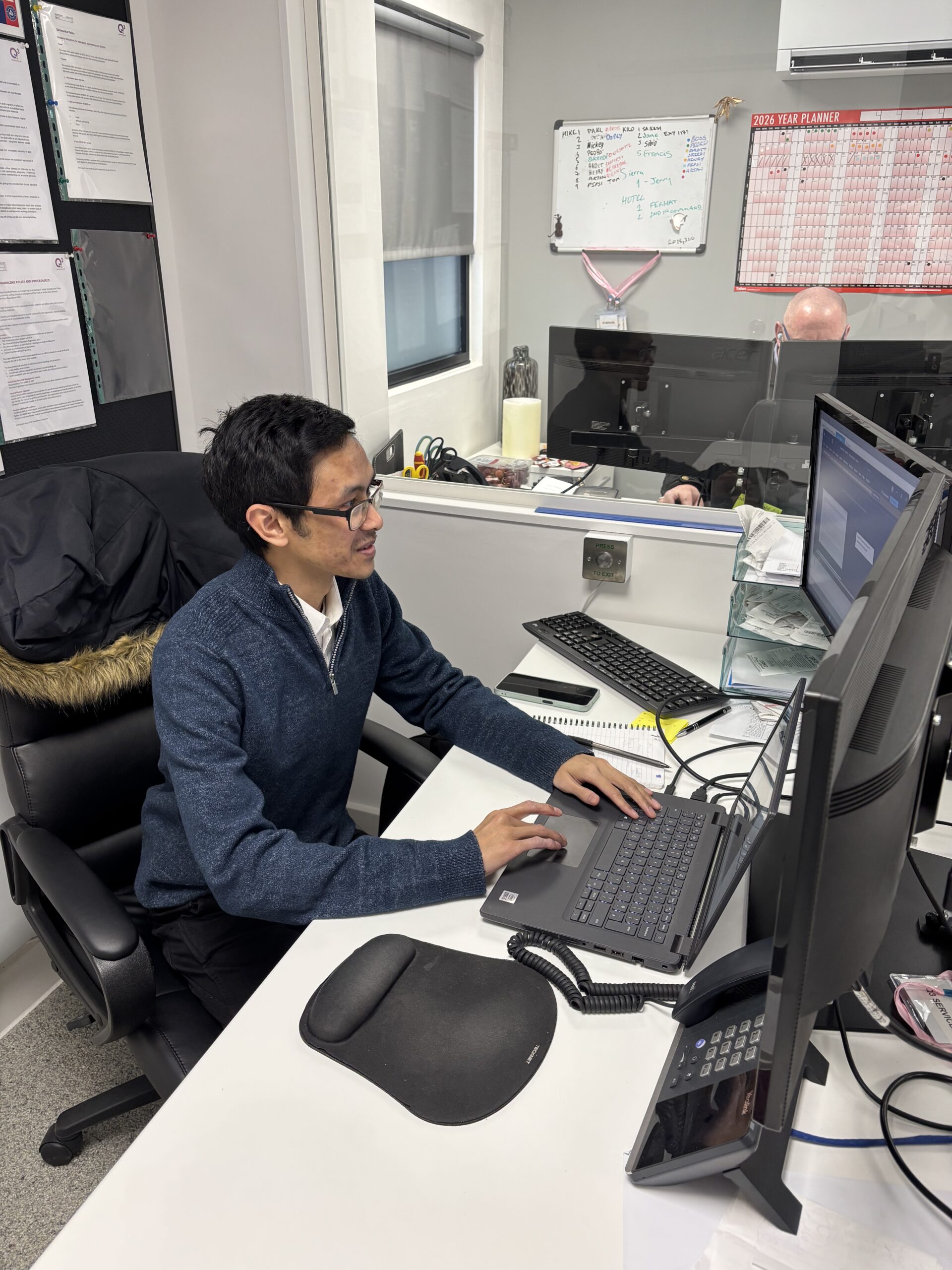
We extend a warm welcome to Ariff Khairuddin, who joins the Q3 team at Chelsea Harbour as Facilities Administrator.

This is his first full week in the job, and we wish him every future success on this flagship contract.

Ariff secured the role against strong competition, ahead of over 300 candidates who showed initial interest via an online recruitment advertisement.

However, by taking advantage our relationship with our client Maximus, who onboarded us as a strategic national employer account,  Q3 was able to tap into the resources of Maximus UK’s employability support through the Restart Scheme, to create a meaningful shortlist and find exactly the right candidate.

Interestingly, Ariff did not have any previous experience of the Facilities Management industry, but that was not important to us. Our job brief was very specific. At Chelsea Harbour, our entire contract runs extremely efficiently on the Facilio CAFM platform which has been customised and deployed to meet the entire needs of this unique, mixed-use, retail, office and residential site.

Ariff’s experience and skillsets as a data analyst were exactly what we were looking for in a position that manages a massive data-driven operation, covering PPMs, compliance and a myriad of tasks each week.

Commenting on the appointment, Lucy Hayes HR director said, “Employability do a great job sourcing and vetting and ensuring we get a great fit for any role.”

Martin Spence, Account Manager for Maximus, said “It’s been a pleasure partnering with Q3 Services to support Ariff into a fantastic new role, one that truly has the potential to take his career to the next level. It’s another great reminder that businesses don’t need to spend big on agency fees when talented individuals like Ariff are ready and waiting for the right opportunity.”

The future face of Cleaning: Why Technology Is Here to Elevate, Not Replace, People

The views of Alex Gavrilovic, sales director, Q3 Services.

When I look back over my career in the cleaning and FM sector, the one constant has been change. Technology and expectations have evolved at a pace I don’t think any of us could have predicted when I first started out. What’s been exciting is not just watching that evolution happen, but being part of it and, in small ways, helping to shape it.

I’ve always been interested in technology, long before it became the buzzword it is today. For me, tech has never been about shiny gadgets or innovation for innovation’s sake. It’s about value. Over the years, I’ve seen the cleaning sector move from being largely manual and reactive to becoming increasingly data-led and measurable. Robotics, sensors, telemetry and smarter equipment have fundamentally changed what’s possible. Crucially, they’ve changed the conversation with clients. We’re no longer relying on perception or opinion alone, we can evidence performance, adjust in real time and design services around how buildings are actually used. That shift will only continue, and I think it’s a very good thing for our industry.

Technology that adds real value

One of my biggest learning curves, though, had nothing to do with technology. It was understanding a deceptively simple question: what does “clean” actually mean? Early on, I realised just how subjective cleaning is. Clean can mean different things depending on the environment, the materials, the time of inspection and the expectations of the person looking. That subjectivity has caused more friction in our industry than almost anything else. A big part of my journey has been trying to remove as much of that ambiguity as possible, to move from opinion to evidence. Whether that’s through measurable hygiene standards, data from equipment, or clearer conversations with clients, the goal has always been the same: make cleaning understandable and defensible.

Technology has helped enormously here. Tools that allow us to understand occupancy patterns or prove that a task has been completed take emotion out of the equation. They support our people, build trust with clients and raise standards across the board. I’m an early adopter by nature, but only when something genuinely adds value. If it doesn’t work in practice, it’s not innovation – it’s noise.

Why Q3 felt right

That mindset is a big part of why Q3 felt like the natural next step for me. Q3 brings together experience from across the FM sector, but with a very deliberate philosophy to be better, be open and do the right thing. We set it up having learned from both the positives and frustrations of larger corporate environments. We wanted to build a business that’s agile, confident enough to put its profit at risk, and focused on delivery rather than excuses. Innovation at Q3 is about making life easier for clients and teams alike.

Looking ahead

I still believe the most successful innovations aren’t always the flashiest. Often, they’re the ones that quietly work in the background, giving you better information and better outcomes. As the industry continues to change, that’s where I see the real opportunity, using technology thoughtfully to make cleaning more transparent, more professional and more valued. After all these years, that’s what still motivates me. Finding better ways to do a job that, when done properly, makes a genuine difference to people’s everyday lives.


Beyond traditional KPIs – taking a wellbeing-led approach to FM

Buildings are expensive to purchase and a logistical nightmare to maintain, yet we invest in them anyway. Why? It’s because they allow our employees to achieve overall business objectives. Surely then, the primary measure of a building’s success should be how well it does this job.

But the FM industry has not traditionally understood performance in this way. Compliance checks and solid monthly reporting indicate that the machines are running, but they don’t tell us whether a building supports the wellbeing of those within it.

For a facility to enable both individual and organisational success, we need to think about how well it supports our fundamental needs. I thought I’d left Maslow’s Hierarchy of Needs behind in my undergraduate textbooks, but it’s surprisingly relevant here. 

We should be asking those baseline questions – does the workplace provide comfort, food, water and a sense of safety – right through to whether it enables collaboration, creativity and self-fulfilment. 

Last time I checked, Maslow wasn’t too concerned about whether 95% of reactive maintenance call-outs were attended on time.

Traditional metrics still indicate a well-organised and professional service, but their importance compared to our duty to support wellbeing needs reevaluating. To do this, FMs need to introduce new wellbeing-driven KPIs alongside their usual ones. 

We’ve started doing this in recent years at Q3 Services and have seen really promising effects: 

Capturing meaningful insights

Strong employee feedback is the foundation for any wellbeing-led approach, and can be gathered by a range of methods:

  • QR codes offer a convenient way to leave a quick rating or comment on environmental conditions. When strategically placed next to thermostats or in natural break areas, this can be done with minimal workflow disruption.
  • End-user feedback groups can often generate a more collective and nuanced understanding of overall workplace perceptions. When employees are eager to engage, this method provides rich and honest insights.

Analysing this feedback against traditional system-performance data then allows us to align our services with sought-after office dynamics. For instance, upon finding out that a rush for the best desks each morning is causing frustration, a more organised desk booking platform can be introduced to eliminate the chaos.

Asking the right questions

How we speak to occupants is just as important as the tools we use to gather their thoughts. 

In addition to familiar ideas of comfort, warmth and productivity, more emotion-led questioning helps to fully gauge workplace sentiment – for example, at which points during the day do you feel most stressed or anxious? Does this space make you feel relaxed? Does it contribute positively towards how valued you feel at work?

Linking FM services with human emotion in this way must be standard practice, especially as neurodiversity becomes increasingly important in workspace design and management.

Subtle changes with big impacts

I’ve finally noticed that acting on any feedback, however niche it may seem, can significantly influence workplace perceptions. 

  • For one organisation, simply switching coffee brands and rearranging the bin layout to make waste disposal more convenient were noted as changes that would make a difference.
  • Another saw value in repositioning refreshment units closer to outdoor spaces, so that employees could make the most of their breaks.

Subtle changes showcase a genuine investment in daily experiences specific to each office, but they are only the starting point – introducing specific metrics that measure impact over time truly signposts an attentive and supportive FM service.

A wellbeing-led approach to FM 

Ultimately, if each morning I arrive at a freezing office, face a 15-minute battle to find a desk and then find out that we’re once again out of coffee, I probably won’t be in the best frame of mind for the day ahead. 

Our traditional KPIs must be placed within a more wellbeing-driven context. Over asset performance and regulatory compliance, understanding human impact is perhaps the most comprehensive way FMs can show their contribution towards bottom-line business objectives.

Mark Hazelwood, managing director IFM/technical services, Q3 Services


Q-Who? High-stakes FM and a rekindled passion for learning

Jayne Lilley’s experience proves that in Facilities Management, you never stop learning

I started this assistant facilities manager role with Q3 in 2024 and I am responsible for overseeing FM on one of Catapult Satellite Application’s key sites, the Westcott Space Cluster. The position was newly created to provide greater focus, quicker decision-making and a stronger day-to-day presence on the site. Beforehand, one manager was responsible for both Westcott and another major site, which meant they had to share their time between both sites.

Although I’m employed by Q3, I work on site with Catapult every day. Being integrated means I’m closely involved with the people, buildings and activities on campus ­– a presence that is essential for managing such a complex and high-stakes environment.

Reactivity and a diverse range of facilities

One of my key responsibilities is responding quickly to any issue that arises. As many of the spaces here support high-value technical work, essential maintenance often can’t wait as it might be able to elsewhere.

Westcott is made up of a wide range of buildings with distinct purposes. The Westcott Innovation Centre includes a reception, meeting rooms and tenant spaces, but we also have a technical building that houses robots and 3D metal printers, a network development centre focused on advanced connectivity, and a drone port with large hangars.

Understanding the different requirements of each space is crucial. While faulty air conditioning in a meeting room is manageable, the stakes are much higher in a technical innovation space. Here, consistent asset output is paramount, as equipment must be maintained at very specific temperatures. Ultimately, knowing what to prioritise and when immediate action is required are both central to my role.

Because of this, constant monitoring takes up large parts of my day. I usually start with visual checks across every building. Some spaces may not have been entered by an engineer for a few days, so it’s important to ensure everything looks as it should. I check equipment levels and look out for leaks, especially during periods of bad weather.

A bridge between Q3 and Catapult

I often describe my role as the bridge between client and provider. Catapult is our client, so I’m responsible for making sure their needs are understood and met. At the same time, I feed information back to Q3 to ensure communication flows clearly in both directions, and we can optimise our service.

Being on site every day helps to build the trust needed to manage such highly technical and labour-intensive spaces. Catapult’s recent contract extension with Q3 has given me confidence that my role is strengthening our on-site operations and overall client relationship.

The value of formal FM training

Alongside my day-to-day duties, I’ve also been undertaking IWFM’s Level 3 qualification – something I was initially quite hesitant about. With 12 years of practical industry experience and some negative past experiences with education, the idea of returning to formal learning wasn’t particularly appealing.

Q3 and my IWFM tutor encouraged me to think differently. After honest discussions about my doubts, I decided that Level 3 would be a more comfortable starting point than the Level 4 course we had originally planned for.

I was genuinely surprised by how much I enjoyed it. Revisiting areas such as risk assessments and compliance proved extremely valuable, and I now approach familiar situations with a completely fresh mindset. It also highlighted how much legislation and best practice in FM continues to evolve.

The way the training is delivered made a significant difference too. While I was pessimistic about taking written exams, the value placed on projects, discussions and presentations really suited my preference for hands-on learning.

Overall, my advice to anyone considering IWFM training: be honest with your tutor or coach about what you’re comfortable with. Starting at Level 3 gave me the foundations and confidence I might not have gained straight away at Level 4. With that first course behind me, I now feel far more open to taking the next step.