Insights
3 Min Read
5 January 2026
Jayne Lilley’s experience proves that in Facilities Management, you never stop learning
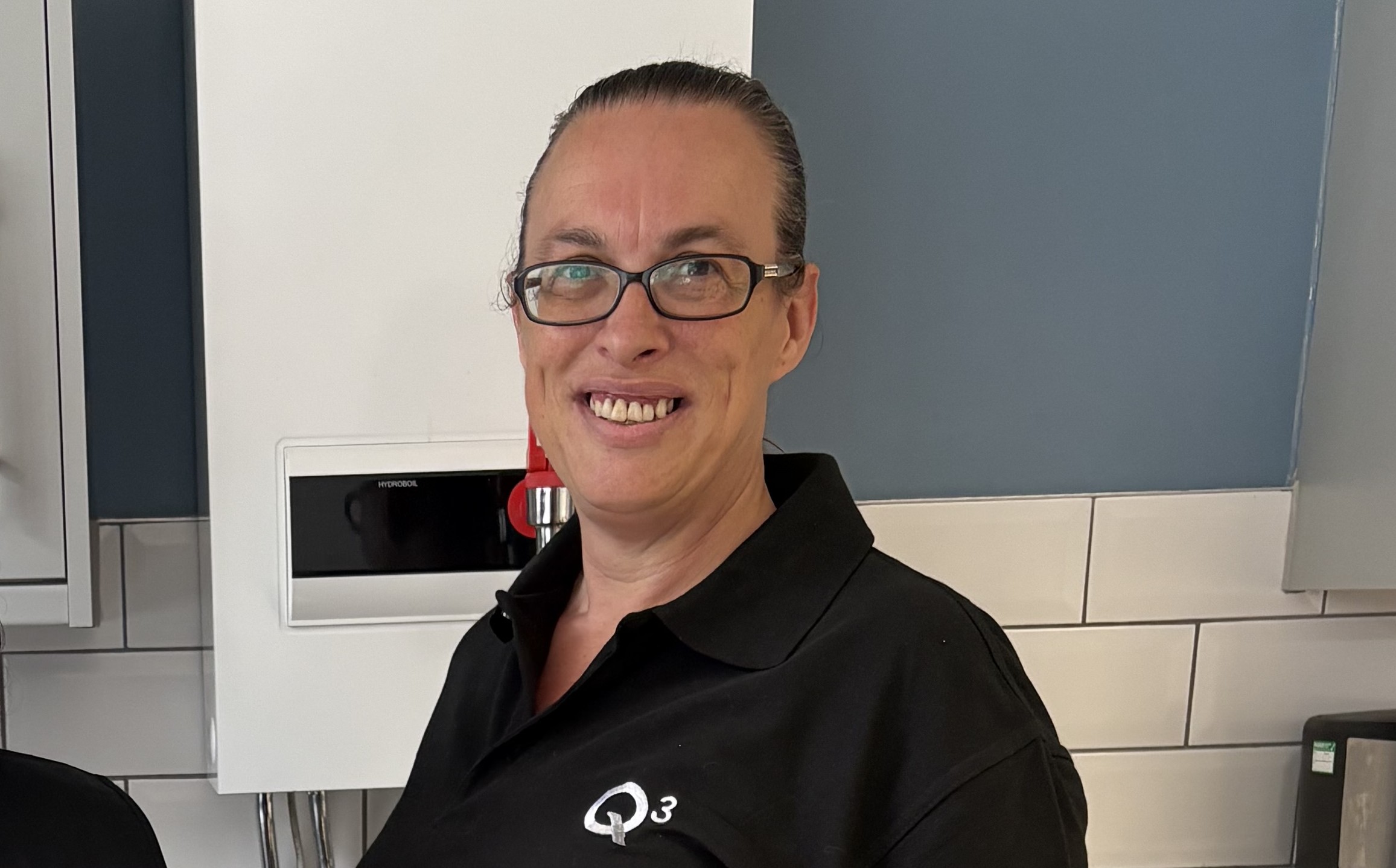
I started this assistant facilities manager role with Q3 in 2024 and I am responsible for overseeing FM on one of Catapult Satellite Application’s key sites, the Westcott Space Cluster. The position was newly created to provide greater focus, quicker decision-making and a stronger day-to-day presence on the site. Beforehand, one manager was responsible for both Westcott and another major site, which meant they had to share their time between both sites.
Although I’m employed by Q3, I work on site with Catapult every day. Being integrated means I’m closely involved with the people, buildings and activities on campus – a presence that is essential for managing such a complex and high-stakes environment.
Reactivity and a diverse range of facilities
One of my key responsibilities is responding quickly to any issue that arises. As many of the spaces here support high-value technical work, essential maintenance often can’t wait as it might be able to elsewhere.
Westcott is made up of a wide range of buildings with distinct purposes. The Westcott Innovation Centre includes a reception, meeting rooms and tenant spaces, but we also have a technical building that houses robots and 3D metal printers, a network development centre focused on advanced connectivity, and a drone port with large hangars.
Understanding the different requirements of each space is crucial. While faulty air conditioning in a meeting room is manageable, the stakes are much higher in a technical innovation space. Here, consistent asset output is paramount, as equipment must be maintained at very specific temperatures. Ultimately, knowing what to prioritise and when immediate action is required are both central to my role.
Because of this, constant monitoring takes up large parts of my day. I usually start with visual checks across every building. Some spaces may not have been entered by an engineer for a few days, so it’s important to ensure everything looks as it should. I check equipment levels and look out for leaks, especially during periods of bad weather.
A bridge between Q3 and Catapult
I often describe my role as the bridge between client and provider. Catapult is our client, so I’m responsible for making sure their needs are understood and met. At the same time, I feed information back to Q3 to ensure communication flows clearly in both directions, and we can optimise our service.
Being on site every day helps to build the trust needed to manage such highly technical and labour-intensive spaces. Catapult’s recent contract extension with Q3 has given me confidence that my role is strengthening our on-site operations and overall client relationship.
The value of formal FM training
Alongside my day-to-day duties, I’ve also been undertaking IWFM’s Level 3 qualification – something I was initially quite hesitant about. With 12 years of practical industry experience and some negative past experiences with education, the idea of returning to formal learning wasn’t particularly appealing.
Q3 and my IWFM tutor encouraged me to think differently. After honest discussions about my doubts, I decided that Level 3 would be a more comfortable starting point than the Level 4 course we had originally planned for.
I was genuinely surprised by how much I enjoyed it. Revisiting areas such as risk assessments and compliance proved extremely valuable, and I now approach familiar situations with a completely fresh mindset. It also highlighted how much legislation and best practice in FM continues to evolve.
The way the training is delivered made a significant difference too. While I was pessimistic about taking written exams, the value placed on projects, discussions and presentations really suited my preference for hands-on learning.
Overall, my advice to anyone considering IWFM training: be honest with your tutor or coach about what you’re comfortable with. Starting at Level 3 gave me the foundations and confidence I might not have gained straight away at Level 4. With that first course behind me, I now feel far more open to taking the next step.
 Channel Islands


 Accessibility