Cobotics go live at Chelsea Harbour

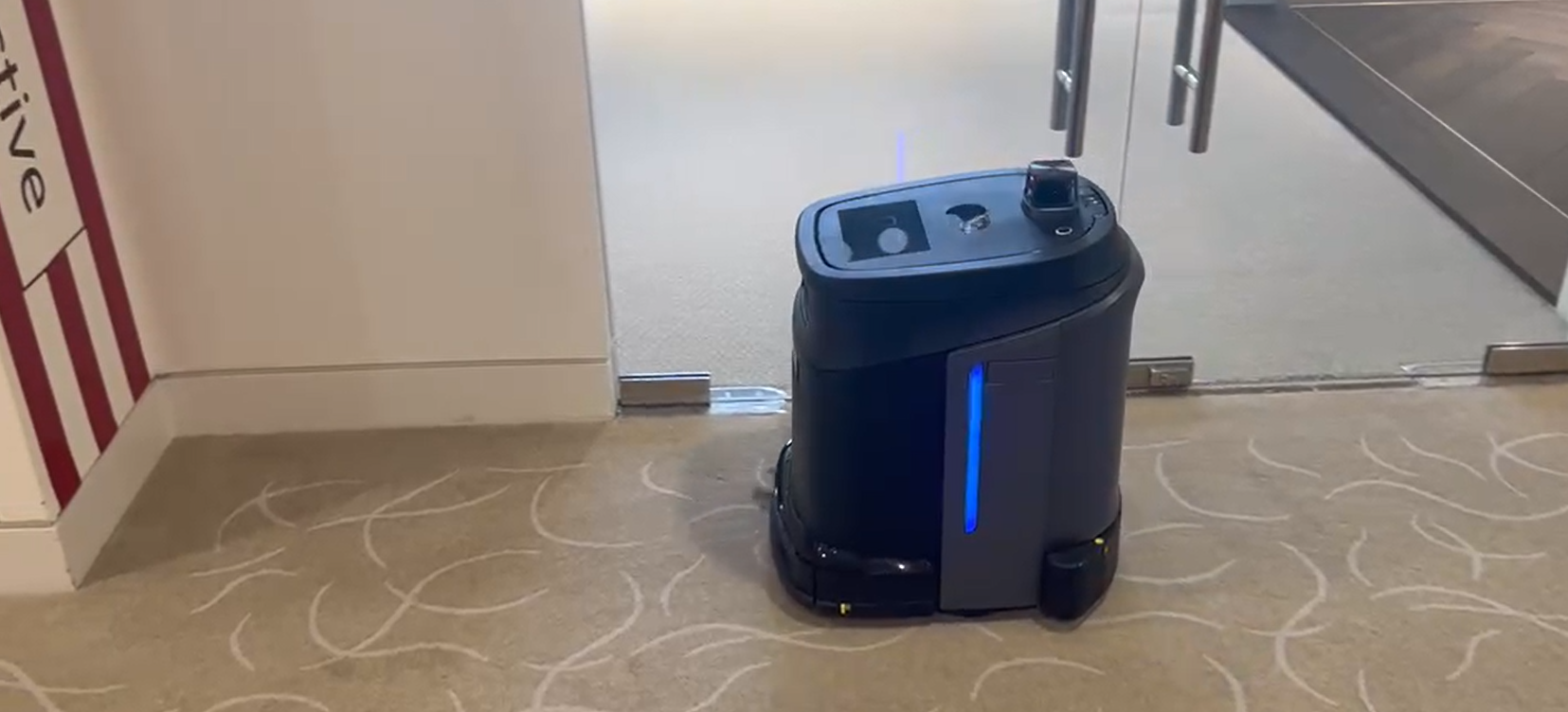
Following a trip to the Channel Islands to see how our Q3 colleagues had successfully deployed cobotics in a major contract on Jersey, COO Stuart Bellew and Contracts Manager Ferhat Goual returned to the London with clear ideas for trying a similar approach at Chelsea Harbour.

Introducing cobotics cleaning isn’t simply a case of plugging in the robot cleaner and letting it go. For a deployment to really work, it’s important to work closely with the client to understand their expectations and to identify the specific demands and challenges the machine is likely to face at that location. Then, through talking to the technology provider, one has to match the machines’ capabilities to these requirements.

As well as scoping the project correctly, the team was aware of the need to manage the roll out through proper staff training and education, to ensure technology worked smoothly alongside regular cleaning staff.

The result is that there has been an easy transition with “the first machine, a Phantas Vacuum from Bunzl called “CJ,” now on site. CJ will be working across Level 5, The Emporium open-showroom, area and although nobody is particularly clear as to how CJ got his name, we’re sure CJ will prove a popular, regular feature as he glides around.

Q3 enhances Facilio CAFM and Helpdesk system with Bruce and Bernard apps incorporating AI

Q3 is expanding the scope and functionality of its Facilio CAFM system with exciting, new developments which will make it even more intuitive and user friendly to clients, workplace end-users and Q3 mobile engineers.

Q3 works with Facilio because of the inherent flexibility of the platform’s architecture and the ability to integrate easily with other systems. We’ve already connected our CAFM with finance systems, IoT sensors for real-time fault detection, and compliance tools like SFG20. We also use Facilitiesline to monitor supplier accreditations.

So, adding an interface with WhatsApp and incorporating voice-based bot agents was a natural next step.

Bernard Bot is an agent which allows customers to log issues and requests via voice, email and WhatsApp and to obtain progress updates on the actions being taken through the same channels. AI allows Bernard to learn and understand these users, so it becomes unnecessary for them to repeat key details like contract, location, or job responsibility, every time they make a call. So, long as the user can quote the right job number, Bernard can interrogate the CAFM database and provide the answer. Only, a broad Glaswegian dialect has confused the voice activated channel on a couple of occasions.

Alongside Bernard is Bruce Bot. Bruce provides a simple interface for mobile engineers to access the works management system and report on their jobs without having to directly access the Facilio portal.

It works like this. Via WhatsApp, an engineer reports he is working on Job 123, and Bruce checks whether this is starting now, or whether the job may have started earlier, perhaps when the engineer was in a basement without phone reception. Everything is timed and date-stamped and once the job is completed, the engineer goes through a prompted series of checklist and water-risk compliance questions.

Lynne English, Operations Director at Q3, said “Like any FM system these days, it’s all about the data. These innovative steps make it quicker and easier to ensure that all the data is collected accurately and on time, giving us a 360° view of what’s happening. Frankly, it shifts CAFM up to a whole new level!”


Learning at Work: Unlocking Potential Beyond the Classroom

An article by Paul Courtney, HR Advisor, Q3 Services, written for Learning at Work Week, May 2026

For many people, the word “learning” still carries memories of classrooms, exams, pressure and, sometimes, failure. The experience can often put people off the prospect of learning for life.

School works brilliantly for some, but not for everyone. Traditional education often relies heavily on one style of learning – reading, memorising and repeating information. Yet people are not one-dimensional. Some learn visually, some aurally, some through experience, movement, mentoring or practical application.

That is why learning in the workplace can be transformational.

At work, learning becomes real. It has context, purpose and immediate relevance. Instead of studying theory for an unknown future, people develop skills that help them contribute, grow and succeed today. For many individuals, this can completely change their relationship with learning.

Workplace learning is not simply about qualifications or training courses. It can take many forms: mentoring, apprenticeships, buddying systems, coaching, shadowing experienced colleagues, practical demonstrations and hands-on experience. Often, people who struggled in formal education thrive in these environments because the learning feels natural and connected to what they do in real life.

Importantly, learning at work also creates something deeper – a sense of belonging and purpose.

When employers invest in people, they send a clear message: you matter, and we believe in your potential. That investment builds confidence, motivation and engagement. People become more willing to contribute ideas, take ownership and develop themselves further because they can see a future within the organisation.

Without that investment, businesses can unintentionally create stagnation. Roles evolve constantly. Technology changes. Customer expectations shift. Industries move forward. If organisations fail to develop their people, employees can gradually fall behind the requirements of their roles, sometimes through no fault of their own.

Equally, businesses themselves risk becoming stale.

Learning keeps organisations fresh. It introduces new thinking, new skills and new perspectives. It encourages innovation and adaptability. In challenging times especially, a workforce that is continuously learning is far more resilient than one that has been left behind.

One of the most rewarding aspects of workplace learning is seeing individuals achieve things they may once have considered unattainable.
At Q3 Services, we firmly believe people should never feel pigeonholed into one role or one level. With the right support, development and encouragement, individuals can break free from perceived limitations and progress far beyond where they first imagined.

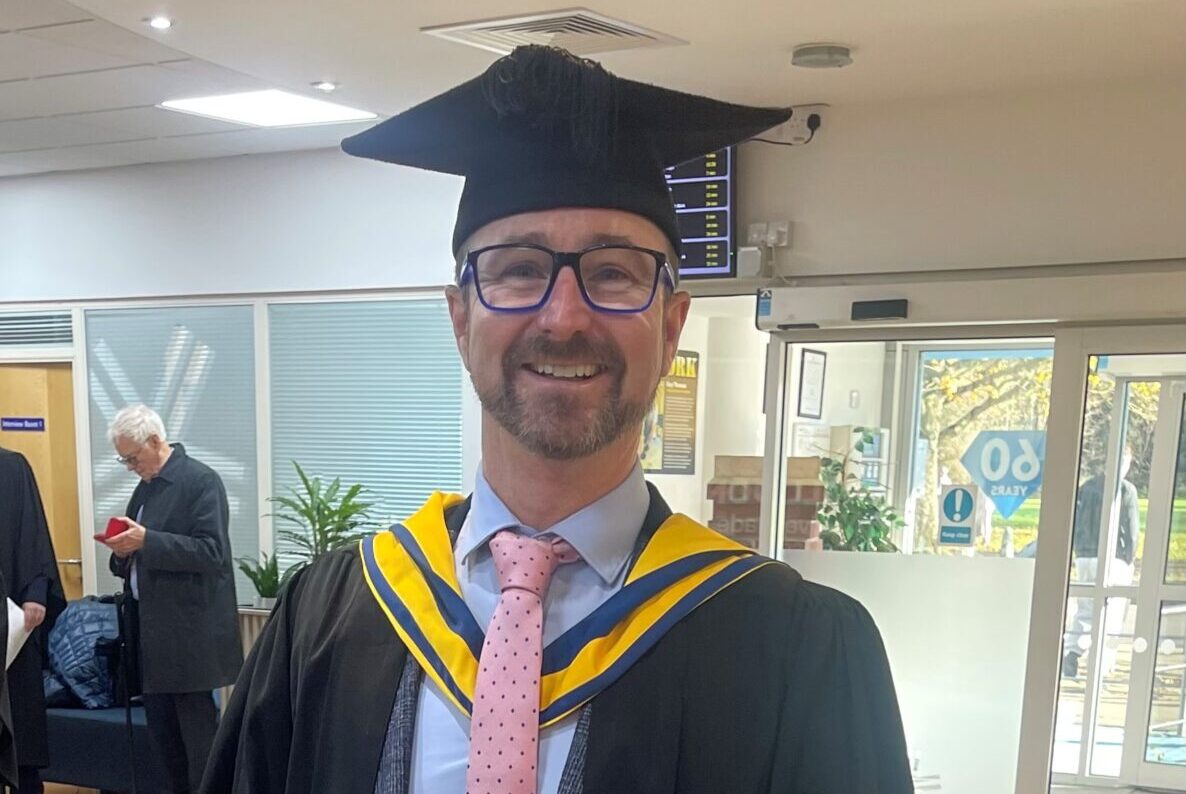
A great example of this can be seen in the career journey of Fabio Goncalves, whose development within the business demonstrates what can happen when opportunity, commitment and learning come together. Stories like this remind us that talent is often unlocked, not discovered instantly.

Developing people properly also creates practical advantages for organisations. Promoting internally can be hugely beneficial because existing employees already understand the culture, systems and values of the business. However, internal promotion only succeeds when people are supported with training, coaching and mentoring.

We have all seen examples where somebody excels technically in a role but struggles after promotion because they were never developed for the responsibilities that came next. A classic example is the outstanding salesperson who becomes Sales Manager without ever being taught how to lead, coach or manage people. Success in one role does not automatically prepare someone for another.

That is why learning and development must be continuous, intentional and aligned with future opportunities.

Learning at work is not a luxury or a tick-box exercise. It is an investment in people, in resilience and in the future of the business itself.
When individuals grow, organisations grow with them.

And perhaps most importantly of all, workplace learning gives people permission to believe that they are capable of more than they once thought possible.


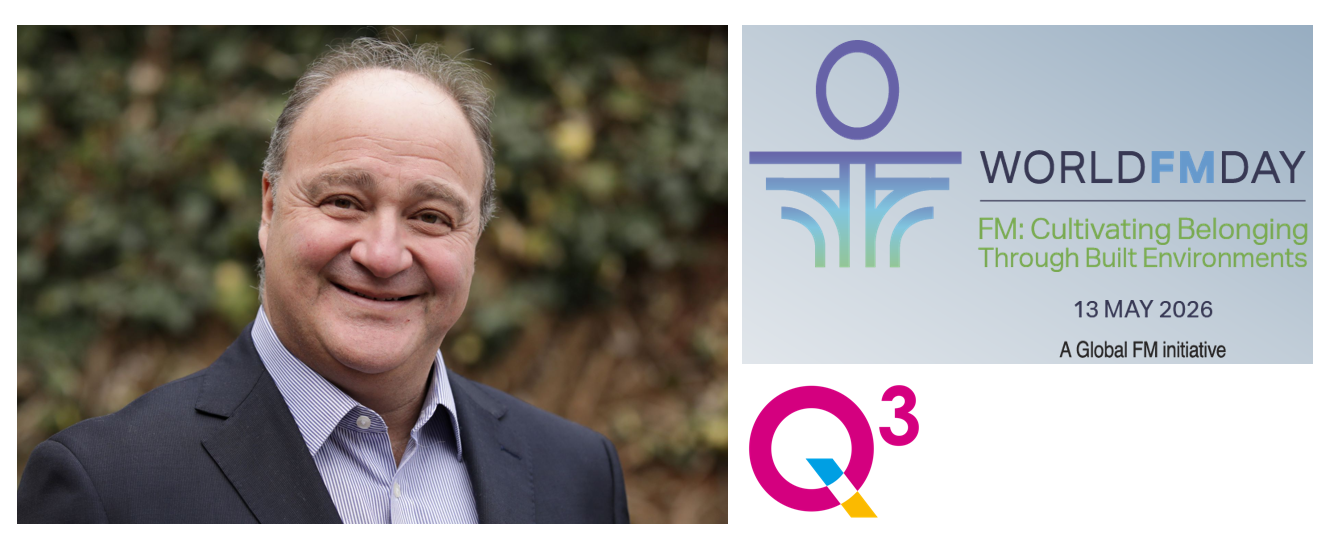
Thoughts from Martyn Freeman on World FM Day 2026

World FM Day, Wednesday 13th May, 2026

This year’s World FM Day theme, “FM: Cultivating Belonging Through Built Environments,” perfectly captures something those of us in Facilities Management have always understood.

Buildings are about far more than bricks and mortar, systems, and infrastructure.

The environments people work in everyday influence how safe they feel, how effectively they collaborate, how supported they are, and ultimately how well organisations perform.

That is why Facilities Management matters so much.

At Q3 Services, we see every day how good FM creates the conditions for people and businesses to succeed:
• Safe and compliant workplaces
• Clean and welcoming environments
• Reliable building services
• Responsive support teams
• Spaces that allow people to focus on their work with confidence
• A great vibe, and a great culture

Much of this work happens quietly in the background, often unnoticed when it is done well. That’s the way it ought to be. And its impact is enormous.

As the workplace continues to evolve, there is understandably a lot of focus on technology, data, and workplace experience. These things absolutely have their place.

But the foundations remain the same.

People value workplaces that are dependable, professional, inclusive, friendly and well managed. Environments where they can do their jobs effectively and feel part of something bigger than themselves.

That is what great Facilities Management delivers.

On World FM Day 2026, I want to recognise all the FM professionals who keep workplaces, public spaces, and critical services operating every single day.

Your work enables organisations to function, teams to perform, and communities to thrive.

Thank you for what you do, because without you we wouldn’t have a business.

The Workplace Isn’t the Problem

Q3’s marketing manager, Ian Adams has some misgivings about the current direction of travel on the productivity, CX and getting people back to the workplace debate…

There’s an ongoing narrative in facilities management around the “intelligent workplace” and “workplace experience.” Offices that adapt to us, respond to us, and ultimately entice workers to come in every day and perform like superstars.

It’s been going on for a while now, and lots of individuals and organisations are laying claim to being thought leaders and experts on the subject. Fair enough, the debate is topical and stimulating, and a lot of the arguments makes perfect sense.

  • Using data to inform best practice? Absolutely. It’s transforming the way FM works.
  • Workspaces that actually function properly? Long overdue, and no one can argue with that.
  • Facilities that respond quickly to real time needs, creating great comfort conditions and a welcoming place to work? That’s using tech to its best advantage. Tick!

But here’s the uncomfortable question… Are we beginning to confuse an efficient well-run workplace with a high-performing organisation?

A lot of the conversation right now suggests that if we just get the environment right and incorporate the sensors, the flexibility, and the “workplace experience,” then improved employee productivity and engagement will follow automatically.

Really? Is there any evidence to support this cause-and-effect hypothesis?

A workplace should support and stimulate the work and yes, the office should allow you to work better. Beyond that, a lot of the current commentary is all cherry on the top stuff.

For people like me, who have worked in quite a few workplaces over the years, the simple basics haven’t changed. People need:

  • Clear expectations
  • Strong leadership
  • Accountability
  • Freedom to do their job and make mistakes
  • A team around them that relies on everyone showing up, playing their part and delivering

I have seen this formula prove successful for teams surrounded by some pretty shambolic workplaces environments. It’s about the people and culture, more than the bricks and mortar.

By all means, fix the things that frustrate people. No one is arguing to retain noisy background distraction, broken coffee machines, unreliable tech or unusable meeting rooms.

But let’s not drift off into a position where we strive to make the workplace compete with home life to earn high attendance rates.

At some point, work is still work, and we have to deliver it, in return for that thing called remuneration. That’s the long-established deal between employer and employee.

If people need to be persuaded by sexy lighting systems, flexible walls and bells and whistles just to turn up, we might not have a workplace problem, we have a culture problem. And a spangly workplace will never correct a toxic culture.

Good facilities management enables good performance; it shouldn’t try to replace the need for it. FM can support the success of an organisation but that shouldn’t make us the driving force.

We mustn’t puff ourselves up to pretend we are so clever and important that we can determine the ultimate success of a client organisation. We can however support our clients achieve success by doing a lot of the smart, heavy lifting.