Facilities management is not just offices. Our thinking needs to catch up.

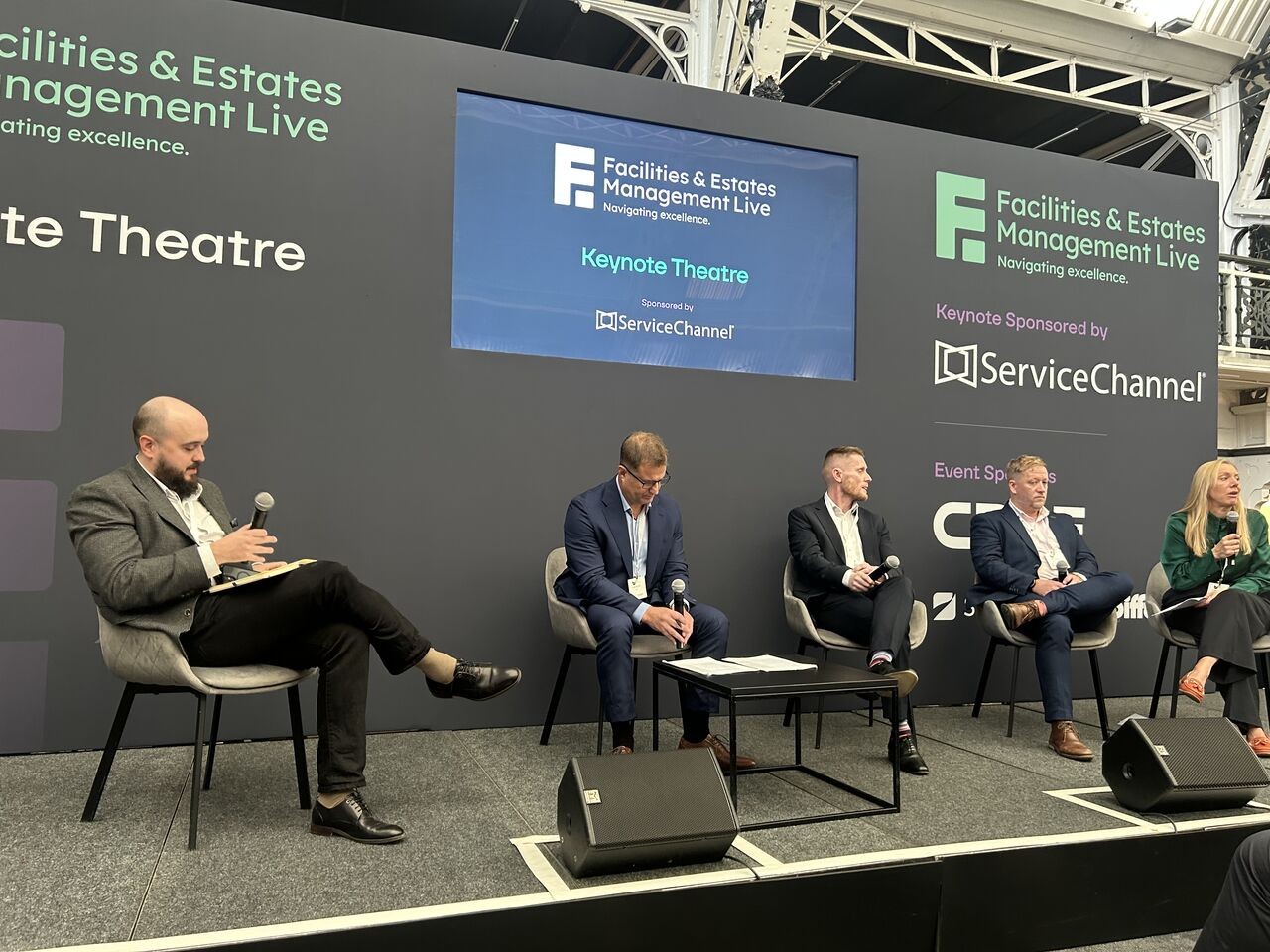
Following his participation in a panel debate at Facilities and Estates Management LIVE, Stuart Bellew talks more about why FM is not just about offices
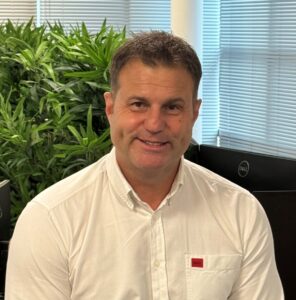
Stuart Bellew, Chief Operating Officer, Q3

I recently joined a panel at Facilities & Estates Management Live to discuss a subject that deserves more attention: “Facilities management is not just offices.” It was an interesting debate, with a wealth of experience and knowledge around the panel. Time was limited, so here are my more considered thoughts on why the conversation matters and why broadening it means more than simply adding a few different building types to the discussion.

For me, the issue is not whether offices matter. Of course they do. It is whether we have allowed one part of our industry to become the default setting for how we describe, debate and value the whole of it. When offices become the reference point for everything facilities management, we risk missing both the complexity of FM elsewhere and the contribution it makes to everyday life.

Start with what a place is there to do

Some of the most iconic places I have looked after during my FM career include The 02 Arena, the Tower of London, Buckingham Palace and Chelsea Harbour. They are hardly a portfolio of office blocks. But they are a reminder that FM operates in places with very different purposes, expectations and demands.

A school exists to educate. An arena venue exists to host events. A mixed-use estate brings together residents, businesses, guests and visitors, whose needs do not necessarily fit neatly together. The fundamentals of safety, standards and compliance remain, but how we deliver them must reflect what each place is there to do.

Take Chelsea Harbour. With its Design Centre, hotel, marina, homes and offices, it cannot be understood through a single workplace lens. Supporting an event, maintaining the estate and looking after the resident and visitor experience are separate but connected parts of the service. Similarly, school cleaning must work around the school day and the academic calendar, not a generic specification lifted from another environment.

That is why I believe the first question should be “What does this place need to achieve?” rather than “What services should we supply?” At Q3, that means understanding the client and the site first, before proposing the solution. The building’s purpose should shape the service, not the other way round. We have always worked that way at Q3.

People are the point, it’s not a cliché!

“FM is about people,” is said so often that it can sound like a bit of a cliché. Yet it remains the most useful way of understanding what we do. The test of a service is not simply whether a task has been completed. It is whether the people using that place can get on with what they came there to do.

We sometimes talk about FM as the invisible army working diligently out of sight – and only noticed when things go wrong! I understand the sentiment. Nobody wants disruption. But there is a difference between a service running unobtrusively and its contribution being overlooked. You only have to imagine a school, shopping centre or visitor destination without its cleaning and maintenance services to see how quickly that distinction matters.

Looking beyond offices helps make that analysis clearer. The people who experience FM are not just employees at desks. They are the pupils, residents, shoppers, hotel guests and visitors. Their experiences differ, but each depends on people doing essential work well. Describing that work as a background cost misses its connection to the purpose of the place.

We missed an opportunity to change the conversation

One point I made during the panel was that, in my view, our industry missed an opportunity during Covid. Cleaning was elevated beyond being just a basic service and was recognised as fundamental to health, safety and wellbeing. Its importance was visible in a way that it had too often not been before.

I do not think we turned that recognition into a lasting change in how the service is understood and procured. Instead, too much of the conversation has slipped back towards treating cleaning as a commodity. The question becomes how cost effective a defined area can be cleaned, rather than what standard the environment requires and what that service enables.

This is not a separate issue from the panel’s title. It is part of the same problem. If we describe FM too narrowly, we make it easier to buy it too narrowly. Looking at the service through the needs of a school, a marina or an events-led estate makes the limitations of a standardised, price-only approach much harder to ignore.

A square-metre rate is not the whole story

If the extent of a procurement conversation is a spreadsheet asking us to insert a rate per square metre, we are being invited to compete as a commodity. That spreadsheet may help compare prices on its own, it cannot explain whether the proposed service is right for the place.

It does not tell the whole story about who uses the space, when work can happen, the skills needed or what disruption would mean. Those are not peripheral details to be considered after the price is agreed. They are the basis of a workable service.

Of course, cost matters. Clients need value for money, and providers need to demonstrate it. But that requires a discussion about outcomes as well as inputs. A lower rate tells us little if the service does not support the site’s purpose. Equally, providers cannot simply insist that FM is valuable – we have to explain its contribution in terms that matter to each client.

A wider conversation, not another dividing line

I am not arguing that office FM has nothing to teach other sectors, or that every environment needs to start from scratch. Leadership, communication, safety and a willingness to understand the client travel well. What does not travel so easily is a ready-made assumption about how a place operates or what success looks like.

The value of a discussion like the one at Facilities & Estates Management Live is that it challenges those assumptions. We should keep doing that beyond the panel by asking whose experience is missing from the debate, what other sectors can teach us and whether the way we buy FM reflects the value we expect it to deliver.

Facilities management is not just offices. It is about enabling places to fulfil their purpose and people to get on with their lives. If we want our contribution to be understood, that is probably where the conversation needs to start.

The value of a people-first approach in facilities management

Some valuable thoughts on the value of people from Lynne English, Operations Director at Q3

Lynne English front picture.

FM has traditionally focused on buildings, assets and systems. The people who use and occupy those spaces were often regarded merely as another link in the chain of responsibilities being serviced.

Over the years, FM has gone through numerous rebrands, refocusing efforts, and even periods of identity crisis in an attempt to attract talent and redefine its purpose. Yet, even today, these challenges continue to be debated on conference stages and across industry forums.

At Q3, we saw a clear picture of an industry that had, in many ways, lost its way. One that had overlooked the part of the work that matters most and those who feel the greatest impact when standards slip: people. The people who use the offices we keep running smoothly; the people who receive care or education in the facilities we strive to maintain flawlessly; and the people who call somewhere home, trusting that their environment simply works.

That realisation shaped how we built our business and defined our values. People are at the heart of everything we do at Q3.

A people-first approach

FM is about making sure the environment works for people – lights on, air clean, systems reliable. When that happens, everything else follows. Well-run environments build morale, productivity and a sense of purpose for everyone within them.

FMs play a subtle but crucial role in achieving this. Conditions such as optimal temperature, humidity and hygiene set the tone for positive experiences throughout a workplace. At Q3, we design our services to deliver this human value every day, helping clients ensure their spaces work for the people who occupy them.

Putting people first also strengthens talent acquisition and retention. Employees increasingly want more than just a job; they seek workplaces aligned with their values and purpose. By introducing agile systems that adapt to occupancy levels and reduce environmental impact, Q3 helps clients create spaces that are both sustainable and appealing to today’s workforce.

We’ve seen that smooth and reliable systems also enhance an organisation’s reputation. Preventative maintenance and proactive management keep buildings running efficiently, control costs and ensure satisfaction for both occupants and owners.

Investing in people

Recruitment and retention have long been challenges for FM. With an industry-wide average age of 49, attracting the next generation of talent has never been more important. We believe the solution starts from within. By expanding apprenticeship programmes and enhancing existing training schemes with more upskilling opportunities, we build competence and loyalty from an early stage, making internal progression more achievable. You can learn more about our ongoing work with the next generation of FM professionals here.

Supporting the development of established employees is equally important. Encouraging staff to pursue external learning, whether through short webinars or full university courses, promotes lifelong growth and ensures our teams remain equipped to deliver the high-quality environments our clients expect. Investing in our people in this way creates the conditions for exceptional performance and truly people-focused facilities management. We support our staff pursuing apprenticeships that are not traditional trades-type apprenticeships. We view this as an investment in both our people and our organisation, creating new career opportunities, sometimes in a completely different discipline. It’s about tapping into the best potential for the individual. Fabio Goncalves, one of our contract managers, is an excellent example of someone who has climbed the professional ranks of the industry. Fabio started his career as a student, and through mentorship and growth has achieved excellent results. He was even a Young Leader Award finalist. Allowing our people to grow and develop is key to our values as a business.

From services to people

The importance of putting people first in FM cannot be overstated. It aligns the industry with the human value clients are seeking from their built environments while enabling us to build skilled and dedicated workforces for the future.

The future of FM lies in shifting from a services mindset to a people mindset. Where we once operated quietly in the background, we now have the potential to step forward and realise a deeper purpose for our work, one centred on the individuals we serve and employ.

FM’s future belongs to those who see people as the system’s most important asset. That’s where Q3 has always chosen to start.


Q-who? My journey back to HR and why our people matter

A blog on her career journey by Lucy Hayes, director, Q3 Services

I’ve always said that great HR is about so much more than just policies and paperwork. It’s about creating a strong foundation for people and culture to thrive in the workplace. Career development, fair treatment, everyday support – all of this stems from having a solid HR backing. My role into HR, much like my role into FM, wasn’t the most traditional, but this has given me a great holistic view of the workplace and allows me to add more value.

Something that a lot of people don’t know about me is that my career initially actually began in HR. When I was fresh out of school, I took a business administration apprenticeship and spent two years working in HR for a factory in Bristol. It taught me a lot about not only the profession, but myself too. After that role came to an end, I ventured down a new path looking for the next challenge.
I became a PA to the IT director of a major construction materials supplier, which didn’t quite live up to my expectations, it was clear I needed something more. All wasn’t lost though, it was suggested that I tried series of project management courses and that was really what set my future into motion.

A left turn into projects and bids

I moved into project coordination and eventually into bid management, first at a defence services company. At that time, if anyone told me FM was boring, I’d point them to the huge jets I used to casually see at work. Following that, I transitioned to a large-scale national FM provider. It was fast-paced, process-driven work, tracking documents, managing submissions, and coordinating big complex contracts.

I didn’t need to know every technical detail of FM at that point. What did matter was understanding the structure and the process, how to keep everything on track. Through those experiences, I gradually found myself growing into my own within the world of FM.

Coming to Q3 – and back to where I started in HR

When I joined Q3, it was initially to manage bids. We were still in the very early days as a business, and the pipeline didn’t justify a full-time bid role. I’m not someone who enjoys twiddling my thumbs, so I looked around and said: “We don’t have an HR function, I can do that.” I knew HR was an essential business function as we grew the company.

That’s when it came full circle for me. I put my hand up to build HR from the ground up, and the leadership team gave me the support to do it. From there, I went on to complete my CIPD People Management level 3 and 5 qualifications.

What people first means in practice

My focus at Q3 now is much more strategic, focusing on projects, compliance, and improving how we support our people. At the heart of all of that is our commitment to being people first. To me, it’s about respect and fairness at every level. I’ve worked for big businesses where I wasn’t treated well, and those experiences have really shaped how I carry out the HR function here. We make sure people are treated fairly, always. And because of Q3’s agile structure, I’m able to be very hands-on and available to all our team members. People know they can pick up the phone and get a response, and I think that really matters to our people.

Building social value with purpose

Our social value work is something I’m especially proud of. A great example is how we’ve partnered with Maximus to help disadvantaged people return to work through our specialist employability programmes. We’ve already seen success stories from people such as care-leavers, and it’s something we’re actively growing, especially in areas like Brighton and Redbridge where we hold major contracts.

We’d also love to do more with young people too. My son recently joined us at Q3 for a week of work experience, and we all really enjoyed it. But with so many of our teams working remotely or across different sites, it’s something we’re still working on how to scale.

Advice to other businesses? Just be kind.

If I could offer one piece of advice to any business leader, it’s really quite simple: just be kind. Most people come to work wanting to do a good job. They don’t want politics or drama, they just want to be respected and treated like humans.

At Q3, we talk a lot about the psychological contract, the unspoken trust between the employer and employee. That trust is everything. If you break it, people stop believing in what you’re doing.

I’ve seen different sides of the FM industry, and I know what good looks like. At Q3, we’re building something better and I’m proud to be part of that.


Lucy Hayes is HR director at Q3 Services. She joined having worked for some of the largest FM providers in the UK. Having started her career in the defence sector, Lucy moved into the corporate world and worked successfully on some of the largest soft FM tenders within the industry.

Originally experienced in bid management, Lucy seized the opportunity through her involvement in the creation of Q3, to transition into HR. From the outset, she has led Q3’s people strategy and having gained the CIPD Level 3 and Level 5 in People Management, has driven through numerous initiatives to support the ‘Quality People’ value which lies at the core of Q3’s corporate values. These initiatives include, DAISY (an online reward and recognition programme), an e-learning platform, Q3’s apprenticeship programme and the implementation of a complete range of quality-people policies, designed to retain and attract quality talent.